

Horror has to be one of the most misunderstood genres of all time. Many dismiss it as nothing more than cheap thrills, jump scares, and fake blood. However, true cinema enthusiasts know that horror is capable of so much more. The genre is the perfect vehicle to tap into the darkest, most twisted parts of human nature.
When horror goes wrong, though, there is no saving it. There are plenty of films that have taken brilliant concepts and reduced them to generic tropes in the hopes of building dread. So it isn’t wrong to say that for every masterpiece that the genre has delivered, it has also produced some of the biggest disasters to have ever been put on screen. If you want to know which horror films to steer clear of, here are some of the lousiest ones of all time.
10
‘Amityville 3-D’ (1983)
Amityville 3-D premiered right at the peak of the 3D craze back in the 80s. It almost felt like film producers wanted to rely on the technology without focusing on the actual movie, and that was the case with this Richard Fleischer-directed film, which feels surprisingly weak for a director of his caliber. The supernatural horror flick is the third installment in the Amityville franchise that follows journalist John Baxter (Tony Roberts), who buys the infamous 112 Ocean Avenue house after exposing a pair of mediums running cheap séances there. The setup is clever and pokes fun at the real-life hoaxes and money-grabs surrounding the Amityville mythology. However, the film quickly shifts gears and turns into a nonsensical mess of every horror trope you can imagine. What starts as a story about a skeptic being forced to confront the supernatural forces at play ends up feeling like a campy parody of the genre.
The movie keeps introducing plotlines and abandoning them just as quickly, whether it’s John’s teenage daughter drowning in a boating accident or her ghost casually walking back into the house moments later. The story feels like it had potential, but it’s so rushed and underdeveloped that you never find yourself invested in anything. Not to mention the technicalities of the 3D format, which was meant to be the sequel’s main selling point. Fans and critics complained that the footage was so dark that it was impossible to tell what was happening on the screen, and if you watch the film now, you’ll see that it looks the same with or without 3D glasses. Amityville 3-D features a strong cast, including Tess Harper, Candy Clark, Robert Joy, and even a young Meg Ryan, but that doesn’t make up for the film’s overall lack of direction or substance.
9
‘Ouija’ (2014)

Another film that completely missed the point of the horror genre is Ouija. The film, directed by Stiles White, almost feels like an extremely long ad for the iconic Hasbro board game. The film’s blatant product placement wouldn’t be so bad if the story made up for it, but sadly, that wasn’t the case. Ouija follows Laine (Olivia Cooke), who convinces her friends to use a Ouija board to contact their recently deceased friend. Things take a turn when they accidentally unleash an evil spirit who begins killing them one by one. The film could have been a fun, pulpy teen horror, but its execution left absolutely no room for that. The plot of Ouija is so predictable that you barely feel any semblance of fear.
The film relies on sudden plot twists and jump scares to keep the momentum going, but with the characters making impossibly stupid decisions, there is no weight to any of it. It’s almost like White decided to pick elements from every successful horror film and threw them all together without thinking twice. What’s worse is how visually monotonous the film feels, with every scene taking place in dim lighting, as if that is supposed to make up for the film’s lack of any build-up. The characters are written to be one-dimensional, and while Cooke does the best she can with the material, it’s just not convincing enough. It’s hard to believe that Ouija actually received a sequel in 2016 titled Ouija: Origin of Evil. Thankfully, though, the Mike Flanagan directorial was far better than the original.
8
‘The Haunting of Molly Hartley’ (2008)

The Haunting of Molly Hartley tries to channel the energy of Rosemary’s Baby (1968), but it ends up feeling like a CW-esque teen drama with a few horror elements sprinkled in. The film, directed by Mickey Liddell, follows 17-year-old Molly (Haley Bennett), who transfers to a new school after surviving a stabbing by her mentally unstable mother. As Molly settles into her new life, she begins to experience hallucinations and visions that hint at something going terribly wrong on her 18th birthday. What’s strange, though, is that she is dealing with high-school cliques and awkward teenage crushes while all of this unfolds. The film’s biggest problem is that it never settles on a tone.
One minute, you have a character-driven teen drama, and the next, a jumpscare pops up out of nowhere. Molly spends most of her time doing things any regular teenager would, and the plot barely moves ahead. The horror elements show up a bit too late for anyone to take them seriously, and they rely on shock tactics that end up going nowhere in the larger narrative. The climax, though, might just be the worst part because all that build-up just rushes toward a strange twist that comes out of nowhere. The Haunting of Molly Hartley might just be one of the most unsatisfying horror films of all time because it doesn’t answer any of the questions it opens with, and despite featuring a talented cast, it gives them practically nothing to work with.
7
‘The Wicker Man’ (2006)

Hollywood remakes have a reputation for completely missing the mark, but Neil LaBute’s The Wicker Man takes that a step further. This remake of the 1973 British folk-horror classic is one of the most baffling films ever made. It follows police officer Edward Malus (Nicolas Cage), who travels to a remote island community after receiving a letter from his ex-fiancée claiming that her daughter has gone missing. He then finds himself surrounded by a female-dominated society of neo-pagans led by the mysterious Sister Summersisle (Ellen Burstyn). The original was a slow-burn that took its time building a sense of dread and really immersing the audience in this strange culture as the protagonist slowly came undone.
However, the remake throws all of that out of the window and replaces it with strange dream sequences and hallucinations. Half the time, Cage is wandering around the island, interrogating the villagers who refuse to answer basic questions. Not to mention that the film has some seriously anti-feminist undertones, where this female-led society is framed as sinister just because they choose to live differently. The mythology that made the original so special is stripped down and replaced with generic beats that just don’t feel interesting enough. The Wicker Man is one of those films that’s so bad it’s good because of its sheer absurdity.
6
‘Exorcist II: The Heretic’ (1977)

John Boorman’s follow-up to the 1973 classic, The Exorcist, has to be one of the worst sequels ever made. The film is so bad that its failure had the potential to overshadow the impact of the original. Exorcist II: The Heretic is set four years after Regan’s (Linda Blair) possession and shows her as a teenager still recovering from the trauma. On the other hand, you have a priest named Father Lamont (Richard Burton) who is assigned to investigate the death of Father Merrin (Max von Sydow). The setup is a great continuation of the first film, but for some reason, Exorcist II: The Heretic just doesn’t feel grounded in that raw fear that made the original so gripping.
Regan’s hypnotic therapy sessions are borderline comedic, along with the scenes where Lamont is transported into the past through visions. The acting doesn’t do the sequel any favors, with Burton’s delivery particularly coming off as flat and unconvincing. Blair brings her signature flair to Regan, but her story is sidelined by all the metaphysical debates that the film decides to center on over actual horror. There’s no denying that Exorcist II: The Heretic is visually compelling, but none of that matters when the script is so weak. You can appreciate the film for at least trying to expand the mythology of the franchise, but also acknowledge that maybe Boorman was a little too ambitious with the idea.
5
‘The Grudge’ (2019)

Some horror classics should be left untouched, and Ju-On: The Grudge (2002) was one of them. The original Japanese film remains one of the most haunting cinematic experiences that stays with you long after the credits roll. In fact, even the 2004 American remake captured the same energy, which just goes to show how brilliant Takashi Shimizu is as a storyteller. Unfortunately, I can’t say the same for the 2019 reboot that practically threatened to destroy the entire franchise’s legacy. The Grudge (2019) was directed by Nicolas Pesce and produced by Sam Raimi. The film was meant to be a darker reimagining that would overlap with the events of the first American film.
The modern version of The Grudge featured an impressive cast, including Andrea Riseborough, Demián Bichir, John Cho, Betty Gilpin, Lin Shaye, and Jacki Weaver, but even they couldn’t save this trainwreck. The film tries to continue the narrative of its 2004 counterpart, but in doing so, it ends up with a timeline that’s so convoluted you need a pen and paper to keep track of it. The narrative keeps jumping between years in a way that feels disorienting. The film largely relies on cheap jump scares to tell its audience when they’re supposed to be scared. The Grudge reboot doesn’t focus on building a terrifying atmosphere organically and leans heavily on set design and an ominous score to deliver weak scares. What’s worse is that this remake feels completely unnecessary because it adds absolutely nothing to the series’ mythology. This one is a total skip for true horror enthusiasts.
4
‘Slender Man’ (2018)

The origins of Slender Man are strange because he didn’t come from a novel or an old folklore. The mysterious horror figure was actually born on the internet after a Photoshop contest entry went viral and turned into a global Creepypasta phenomenon. The character has always been a tall, faceless being lurking in the background of dark, blurry photos. The mystery behind Slender Man is the whole point, and the idea of centering a movie around the character was a great idea in theory. Unfortunately, Slender Man completely misunderstood the assignment and gave us a generic horror story that failed to lean into the legend. The story follows a group of teenagers in Massachusetts who summon Slender Man through a cursed video.
However, when one of them disappears, the rest start experiencing hallucinations and visions that feel completely disconnected from the character’s original lore. The film’s weakest point was that it showed Slender Man way too much and turned him into a run-of-the-mill boogeyman. Instead of feeling like this ominous presence that could creep up on people anytime, he felt flat and extremely un-scary. Not to mention the film blatantly copied a lot of elements from The Ring franchise and tweaked them to fit Slender Man’s Creepypasta roots, but even that didn’t work out. Slender Man proves that sometimes, things on the internet should just stay on the internet.
3
‘Jaws: The Revenge’ (1987)

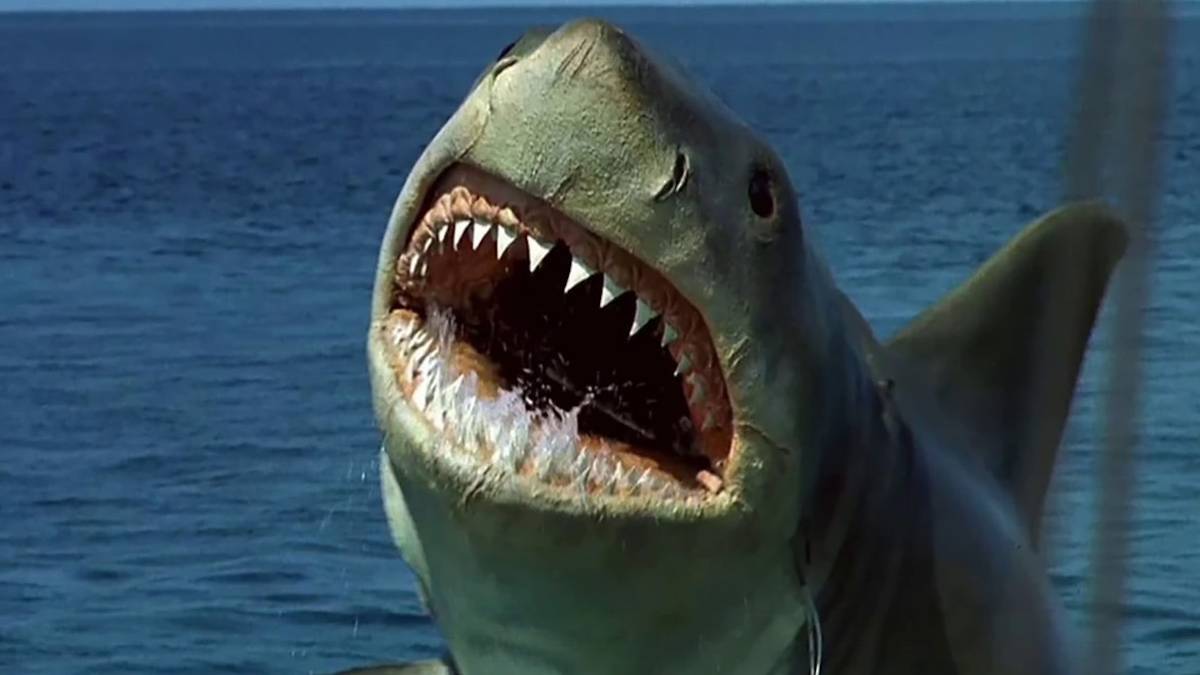
Jaws: The Revenge is not only a bad horror movie, but it is also one of the worst sequels of all time. There’s no denying that Jaws (1975) completely changed the thriller genre for years. It created a sense of paranoia without ever needing to show the monstrous shark that the entire story revolved around. However, the fourth and final film in the franchise threw away all of that subtlety to the point where it almost feels like a parody of the original. The story follows the widowed Ellen Brody (Lorraine Gary), who is convinced that a shark is seeking revenge on her family. The entire narrative revolves around this great white personally hunting the Brodys and killing them. Things really take an absurd turn when Ellen decides to move to the Bahamas, of all places, to protect herself.
Somehow, though, the same shark manages to follow her all the way there. Not to mention that the film implies some sort of psychic connection between Ellen and the shark without ever fully committing to it, so you’re left confused about what’s happening half the time. The shark itself is a major downgrade from the previous installments, and the fact that it leaps out of the water every chance it gets really reduces the scare factor of it all. To top it all off, the film was released with two different endings, each one feeling just as rushed and ridiculous as the other. Jaws: The Revenge is a masterclass in lazy writing, unrealistic plotlines, and a central character that you don’t even want to root for.
2
‘Halloween: Resurrection’ (2002)

The Halloween franchise remains unmatched to this day. Michael Myers, originally played by Nick Castle, feels just as scary as he did in the first film back in 1978. However, the film series wasn’t immune to misfires, and Halloween: Resurrection stands as a testament to that. For starters, the film immediately angers longtime fans by undoing the ending of Halloween H20 (1998) and then killing off Laurie Strode (Jamie Lee Curtis) in its opening sequence. After spending 20 years building toward the ultimate final girl’s confrontation with Michael, the movie erases all of that in one of the most anti-climactic send-offs of all time. From there, the film is never able to recover.
The plot of Halloween: Resurrection follows a group of college students who get the chance to participate in a reality show called Dangertainment, hosted by Freddie Harris (Busta Rhymes) and Nora Winston (Tyra Banks). They then have to spend a night inside Michael Myers’ childhood home while cameras stream their every move to viewers across the internet. However, things take a turn when the real Michael (Brad Loree) returns and begins eliminating the cast. The setup could have been interesting, especially since the film came out during the boom of early-2000s reality TV. Sadly, though, instead of executing the concept well, the sequel relies on gimmicks, features a chaotic edition, and poorly-written characters that you end up rooting for Michael of all people. The tone is constantly shifting between slasher horror and comedy and is definitely one of the lowest points in the Halloween franchise.
1
‘The Human Centipede 2 (Full Sequence)’ (2011)

If you thought the first Human Centipede (2009) was bad, its sequel is an absolute nightmare. The body horror film takes everything that made its predecessor so controversial and amps it up to the point of no return. The Human Centipede 2 (Full Sequence) is viscerally gross, chaotic, and bleak, and the fact that it is filmed in black-and-white doesn’t tone any of that down. The story follows Martin Lomax (Laurence R. Harvey), a mentally disturbed and severely abused parking-garage attendant who becomes obsessed with the original Human Centipede.
Some might appreciate the film’s meta nature, but the sequel follows absolutely no structure and is a relentless montage of violence and degradation that will haunt you for days. What’s horrible about this film is that it just shocks its audiences for the heck of it. There is no character development and no resolution at all. In the end, the film is absolutely repulsive, not because it’s scary, but because it thinks horror means leaving people sick and exhausted.
Source link
